Showing posts with label art. Show all posts

Saturday, October 30, 2021

Generations of art and artists

 Art plays an important part in the mental and intellectual growth of children. 


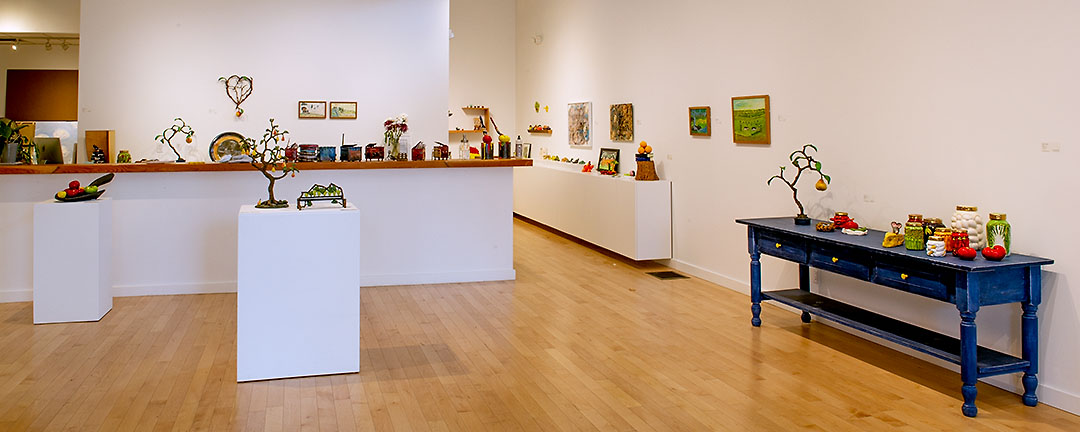
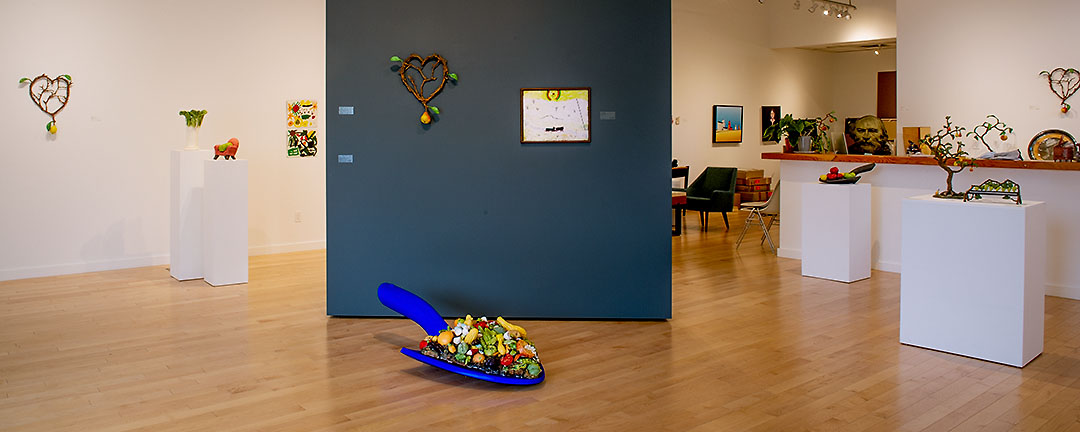
Generations is a family show, featuring my dad’s artworks, my own, plus works by my kids and grandchildren. When I was teaching art education to teachers at the University, I would use slides of my own kids’ and grandkids’ artworks, to give teachers an idea of what to expect at each age and grade level. From the time my kids could hold a pencil or crayon, I kept their scribbles, their drawings and paintings. When they became able to manipulate clay, I kept the clay objects they made and painted. This exhibition, Generations, confirms that the arts and art education, are fundamental to hand and brain development. 


For almost a decade now, the arts ecology in this province has suffered a drought. As usual, when the economy hits the rocks, governments cut art budgets in the name of austerity. In Europe and Asia, the arts are taught at every grade level.


That’s why we need to advocate for arts education.

We are moving into a future that will require creative thinkers who will be able to solve a host of new problems creatively, using both hands and both hemispheres of the brain.


Monday, November 7, 2016

The Bison are Back


There were between 50 and 60 million bison on the prairies when the railroad and European settlers arrived. Within a couple of decades, their numbers were reduced to about 2000.

Grant McEwan, author and historian, has called this “the most spectacular slaughter of wild animals in world history.”

The prairies were covered with bison skeleton bones. Gathering the bones became a lucrative cash “crop” for the first settlers.  The bones were shipped east where they were processed into phosphate fertilizer, used in the sugar refining industry and in making bone china. Carloads of bones shipped from Moose Jaw and Regina represented well over several million bison.  

Today, bison herds, large and small, are distributed all over North America from Alaska to Texas, and throughout the Canadian prairies.

The bison are back! Enjoy your bison burger!


Wednesday, February 24, 2016

The Cicansky Gazebo

Large or small, a gazebo is a refreshing focal point in the garden, providing shade, shelter, rest, and intimate views of the surrounding landscape. It's a place where life and art are rooted, a place where the smell of wet earth, the sight and feel of nature's fecundity and the rhythm of its unfailing cycles reminds us of our place in creation. And it's a place to watch butterflies and bees among the flowers, to delight in the passing seasons, the evening moon and the morning star.

Grow Regina and I have actively begun the process to raise funds to allow the construction of this gazebo in the Yara Community Gardens on Queen Street in Regina. If you would like to help, or make a donation, please contact Grow Regina.


Monday, March 24, 2014

The Eternal Garden

Digging the winter garden of 2014.

Tuesday, October 23, 2012

Urban Wildlife

Life in our little corner on Turnbull Place has become a lot more interesting since my new neighbour Jack has moved in.

Jack is a lagomorph, a prairie white-tailed jackrabbit. He has taken up residence in a bushy corner of my front yard dominated by a large, spreading Colorado Spruce, surrounded by tall Karl Foerster and shorter Oat grasses, amidst local drought-tolerant flowers.

The prairie jackrabbit world -- like our own -- has become more fragile and complicated. Moving into the city is a flexible and resilient way for Jacks to adapt to habitat loss and climate change.

In early spring, Jack is out on the boulevard eating green grasses and dandelions. Several times I have seen him out there with a partner. No March Hare madness on display... Jack is discreet. He's just claiming his little patch of paradise.

We acknowledge each other. We share the same space, breathe the same air and are blessed by the same sun. Walking along the boulevard where he is crouched down, he looks at me as if to say, "This is my world too!"

Monday, May 14, 2012

Totems of the Self

At first glance, Victor Cicansky's books seem to constitute a motley autobiography, a multivolume Song of Myself:  "My Life With Clay", "My Garden Palette", "Regina: My World", "My Bronze Age", and so on. The titles point to two of his central preoccupations: the cultivation of gardens, and the making of art in clay and bronze using "My Colours"  glazes and patinas. Like Joe Fafard, his colleague from the days of the Regina Clay scene, Cicansky has a mischievous talent for befuddling the eye of the beholder. Even his bugs are ironically comedic, having exercised their "biting" wit upon the volume entitled "Control of Insect Pests".Upon seeing the damage inflicted by these trickster devourers, I was reminded of Bacon's famous dictum that "some books are to be tasted," while others are to be chewed and digested".
– Dr. Eva Seidner, for the Mira Godard Gallery

In literary works there are significant differences between an autobiography and a self-portrait, and it would be interesting to pursue elsewhere the question of whether or not similar distinctions apply in the visual arts. For the moment, however, I wish to focus on the clearest and most basic distinctions between Cicansky's books and the universal idea of "the book" as collated information printed on paper and bound between boards.For even without the benefit of Cicansky's background notes, the viewer understands that these volumes and their titles stand for passages or "chapters" in the life of the artist. But of course, Cicansky's books are not books in anything other than their outward appearance, which in fact belies their true nature. They are simulacra  conceptual representations of what Cicansky's autobiography might look like, if he were to publish it in book form.
– Dr. Eva Seidner
We are accustomed to thinking of the Great Books as somehow transcending the realm of existence in which their mortal authors and readers must dwell. But even a book whose ideas and mode of expression survive through many generations cannot endure forever as a physical object. By fashioning his books out of clay, Cicansky seems to underline their fragility and their connection to the earth, from which all things come and to which all eventually return, to come again as new forms in a new season.
– Dr. Eva Seidner

Self-Portrait: A Small Library 2011 was part of The Self-Portrait Show, the 50th Anniversary Exhibition at the Mira Godard Gallery in Toronto from mid-March to mid-April. Excerpts from "The Patient Labyrinth of Lines", the accompanying essay by Dr. Eva Seidner are ©2012, reprinted with permission.

Wednesday, February 16, 2011

A Winter Trip to the Foundry

On February 1st, with afternoon windchill temperatures a mean -34°, I left for Calgary and the foundry where I have my bronze work cast. I phoned the highway hot line and was informed that winter driving conditions exist to the Alberta border: blowing snow, drifting and icy sections. It’s a winter drive and I carry extra clothes, a sleeping bag, food, water, candles and matches. I have good winter tires but I am still cautious about my speed. The panorama of snow and sky that unfolds before me is not exactly a winter wonderland; it’s a slow and difficult drive and it was a relief to see Swift Current through the drifting snow. I decide to stay the night. Overnight, the temperatures moderated somewhat, the wind died down, and the warming sun on the highway made for good winter driving to Calgary.

Next morning the bronze casting excitement begins. Bronze lost wax casting process has been around for long time and was known to many cultures as far back as 4000 BC. and has survived as medium for artistic creation .

There is something magical about the metamorphosis of a creation modeled in clay or wood and wax being cast into bronze. It’s a process that depends on the power of fire. Simply put, the original sculpture is invested in a refractory slurry, air-dried, the mold of wood and wax is burned out, leaving an empty refractory shell into which white-hot bronze is poured. With the investment (the shell) cleaned off, the bronze sculpture pieces of the original sculpture, sit in a pile on the floor of the foundry waiting to be assembled by the skillful foundry team and the artist. A patina is applied to the sculpture and then lacquered to protect the finish.
If the trip to Calgary was challenging, the return trip to Regina was even more so. I finished my work at the foundry around 2 o’clock Friday afternoon, had my van loaded up and was ready to go. The weather advisory from Environment Canada was not good. A big storm was brewing over the Cypress Hills that would affect Medicine Hat, Maple Creek and Swift Current, and would begin pounding the region with snow and freezing temperatures beginning Saturday afternoon. Rather than be snowbound in Calgary waiting out the storm, I decided to drive to Medicine Hat, stay the night and head for Regina early Saturday morning.

I was warned that the weather and the road conditions along the Number One could be unpredictable. It was raining as I left, but less than an hour out of Calgary the rain turned to hail, then it started to snow, which turned into rain again and continued to rain all the way to Medicine Hat. Unpredictable indeed! I stayed the night in Medicine Hat.

The Saturday report on the Saskatchewan hotline warned against unnecessary travel on a stretch of highway from Maple Creek to Swift Current that’s always unpredictable with blowing snow, icy conditions and most worrisome, black ice. There were patches that bore out the road reports but for most of way the driving was slow, and would have been uneventful but for the small herds of antelope along the north side of the highway. The pronghorn antelope is found only on the Great  Plains of North America and is so fast it can reach speeds of 60 miles per hour and can outrun any predator.

Stopped in Swift Current for a cup of tea to prime myself up for the final stretch of road. Surprisingly the sun was out, and the highway was mostly clear and hazard-free. Outside the town of Herbert I passed a moose munching on twigs and grasses.

I was feeling a bit hungry myself and determined that upon my arrival home, I’d stop at the new Orange Boot Bakery and pick up a warm freshly baked baguette, stop for a bottle of good wine, and along with the Applewood Smoked Cheddar in the fridge at home, I’d rest and celebrate another successful trip to the foundry.

And finally, here is the finished table that I brought home from the foundry:

Friday, July 30, 2010

The Brackendale Pantry

I've returned from my Brackendale adventure. Artists for Kids operates under the auspices of the North Vancouver School Board. Over the years it has invited more than forty of the best-known artists in the country to the art camp to inspire both teachers and children.

As artist in residence I designed two projects for the students: one studio project and one environmental.

After a short slide talk about my pantries and jars, I produced a ceramic gallon of fish I had made and passed it around while we talked about what it was the students wanted to preserve. They were keen and pumped up with the magic of creation. "Just give us the clay!"... and the Brackendale Pantry was born, a collection of the jars these bright and talented students made.

Wednesday, July 28, 2010

Brackendale Outdoors

The spectacular Paradise Valley near Brackendale, B.C. is an important gathering place for Bald Eagles. In the late fall, thousands of eagles congregate in this area from as far away as Saskatchewan, to feed on salmon. How do they all know when the salmon are running? Like so much in nature we know little about this "lower life" form phenomenon. To understand more about these birds we invited local Squamish elders to tell us about their history in this place. Around the fire in the Big House they drummed and sang their songs and told us stories about fish and taught us an eagle dance.

The next day we decided to build the biggest eagle's nest ever on Eagle's Point. The nest is 25 feet in diameter and the eggs are about the size of a small car. The first image is the nest. In the second image, the teachers, assistants and staff are all doing the eagle dance. In the final image, the nest builders proudly pose for the camera.