Showing posts with label clay. Show all posts

Saturday, October 30, 2021

Generations of art and artists

 Art plays an important part in the mental and intellectual growth of children. 


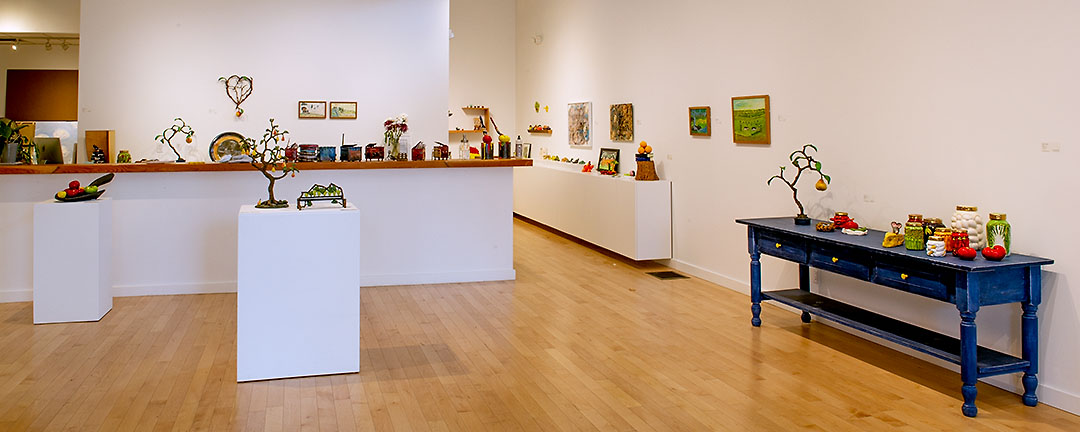
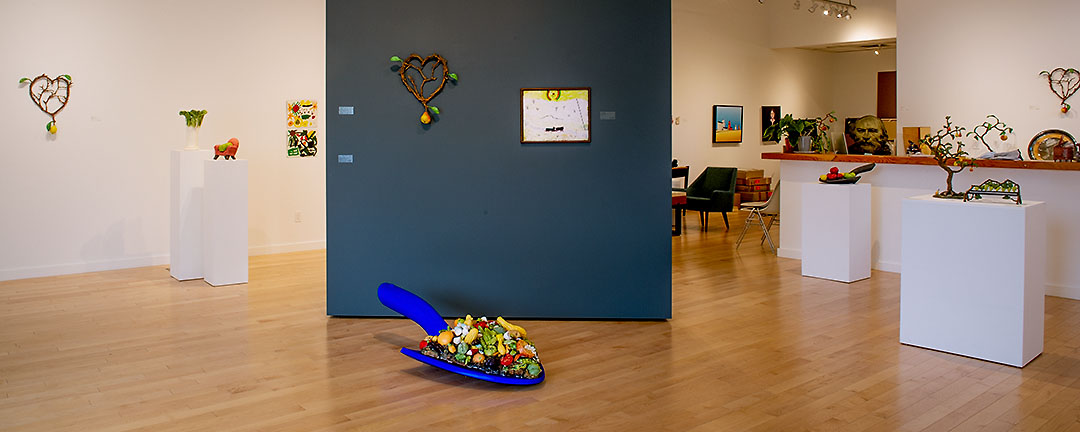
Generations is a family show, featuring my dad’s artworks, my own, plus works by my kids and grandchildren. When I was teaching art education to teachers at the University, I would use slides of my own kids’ and grandkids’ artworks, to give teachers an idea of what to expect at each age and grade level. From the time my kids could hold a pencil or crayon, I kept their scribbles, their drawings and paintings. When they became able to manipulate clay, I kept the clay objects they made and painted. This exhibition, Generations, confirms that the arts and art education, are fundamental to hand and brain development. 


For almost a decade now, the arts ecology in this province has suffered a drought. As usual, when the economy hits the rocks, governments cut art budgets in the name of austerity. In Europe and Asia, the arts are taught at every grade level.


That’s why we need to advocate for arts education.

We are moving into a future that will require creative thinkers who will be able to solve a host of new problems creatively, using both hands and both hemispheres of the brain.


Monday, March 23, 2020

The Gardener's Universe sets down roots in the Maritimes

As part of the opening reception for his lifetime retrospective exhibition at the Confederation Centre of the Arts in Charlottetown in early March, Victor was invited to present an Artist Talk on some of the inspiration behind his artistic work. He chose to speak about Dirt.

Early in March, Victor made his first visit to Prince Edward Island for the 
opening reception of his retrospective exhibition, The Gardener's Universe.
Victor, and the show, were warmly received, and a good time was had by all.
I grew up with healthy dirt on my hands. My fascination with dirt (and gardens) developed around the age of seven, as I observed my grandmother Bunica standing barefoot in her early spring garden, bending down to scoop up a handful of garden soil. She squeezed it. She smelled it. She rubbed it between her fingers to examine it for organic matter. Was the soil alive? Was it ready for planting?

A teaspoon of healthy soil can hold up to one billion bacteria according to Kathy Merrifield, a retired nematologist from Oregon State University. Each of these creatures has a role to play in keeping soil healthy, but this underground livestock also needs to be fed, to maintain and renew soil fertility. Nature does this by recycling plant and animal residues. As gardeners, we do it by composting and mulching to increase organic matter. Voracious soil bacteria break down organic matter into nutrients that plants need to grow and to stay healthy.


As a kid, I could walk all the way to Wetmore School down back alleys from my home in the Garlic Flats. Every backyard had a garden. Back then, most people were still connected to the land, like my grandmother Bunica, getting their hands dirty planting gardens. That's what gardeners have been doing for thousands and thousands of years. Soil is the foundation of life. It has sustained us.

The disconnect with the land came around 1947/50, with the first supermarkets selling fruits and vegetables, based on mechanization and chemical farming using herbicides, pesticides, and synthetic fertilizers This destroyed the natural productivity of the soil and polluted water resources. Industrial food production is a major polluter of our environment. Most people don’t even know where their food is coming from, how it was grown or how it was processed. Cheap food is packaged in plastic and the only thing that matters is price not quality. Wash your fruits and vegetables, they say!

However, a revolution in gardening is well under way. People are digging up their unproductive, chemically-polluted lawns to grow organic gardens. This transition is about people reconnecting with garden dirt and with growing food where they live. Others are joining community gardens. Still others with shovels in hand are digging up their backyards and planting gardens with lettuces, radishes, onions, tomatoes, cucumbers, and herbs and much more. This revolution in planting productive organic gardens is growing by leaps and bounds.  

By planting an organic garden, you are working with nature not against it. Involve your grandkids. Gardening is a magnet for kids. It’s a small step toward food security, but an important part of building a sustainable world.

Photos ©2020, Courtesy of Jan Pel, Julia Kruger

Monday, November 7, 2016

The Bison are Back


There were between 50 and 60 million bison on the prairies when the railroad and European settlers arrived. Within a couple of decades, their numbers were reduced to about 2000.

Grant McEwan, author and historian, has called this “the most spectacular slaughter of wild animals in world history.”

The prairies were covered with bison skeleton bones. Gathering the bones became a lucrative cash “crop” for the first settlers.  The bones were shipped east where they were processed into phosphate fertilizer, used in the sugar refining industry and in making bone china. Carloads of bones shipped from Moose Jaw and Regina represented well over several million bison.  

Today, bison herds, large and small, are distributed all over North America from Alaska to Texas, and throughout the Canadian prairies.

The bison are back! Enjoy your bison burger!


Sunday, October 23, 2016

The Edible Landscape

The Edible Landscape takes us back to the land.

The most profound garden image I carry is of my grandmother in spring, bending down to gather a handful of soil in her hand. She squeezed it, smelled it, opened her hand and let it fall back to the ground. Was it moist enough? Did  she smell the life force of the compost? Was it ready for planting?

There was something magical about her connection to the garden and the bountiful flowers and vegetables she would produce. It is that connection that inspires every bite in my edible landscape exhibition.
                                                        – Victor Cicansky, October 23, 2016
                                            – Photo by Gina Fafard/Slate Fine Art Gallery


Monday, October 7, 2013

My new Exhibition


"The power of Victor Cicansky’s sculptures result from the intimate relationship the artist has with the art of gardening. When emulated in clay and bronze with his carefully attention to detail Cicansky’s enhances the often overlooked beauty of common fruits and vegetables. This effective use of materials accentuates the dependency of humanity on produce and allows the sculptures to speak to the delicate and fleeting existence of the bounty of the harvest."

Tuesday, October 23, 2012

Urban Wildlife

Life in our little corner on Turnbull Place has become a lot more interesting since my new neighbour Jack has moved in.

Jack is a lagomorph, a prairie white-tailed jackrabbit. He has taken up residence in a bushy corner of my front yard dominated by a large, spreading Colorado Spruce, surrounded by tall Karl Foerster and shorter Oat grasses, amidst local drought-tolerant flowers.

The prairie jackrabbit world -- like our own -- has become more fragile and complicated. Moving into the city is a flexible and resilient way for Jacks to adapt to habitat loss and climate change.

In early spring, Jack is out on the boulevard eating green grasses and dandelions. Several times I have seen him out there with a partner. No March Hare madness on display... Jack is discreet. He's just claiming his little patch of paradise.

We acknowledge each other. We share the same space, breathe the same air and are blessed by the same sun. Walking along the boulevard where he is crouched down, he looks at me as if to say, "This is my world too!"